Local Feed Production & Alternative Feeding Systems
Breaking feed monopoly costs. Complete engineering blueprints for on-farm feed mills, extrusion physics for floating fish feed, Pearson Square formulation mathematics, and circular bioconversion using Black Soldier Fly Larvae, duckweed, Azolla, and fermented silage.
Field-Engineered Manual • Updated September 2026The Feed Cost Imperative: 65% to 75% of Operating Expenses
In commercial poultry, swine, and intensive aquaculture enterprises, purchased commercial feed accounts for 65% to 75% of total production costs. Commercial feed brands build 25%–35% gross profit margins, distributor markups, and long-distance transport costs into every bag. Operating an on-farm feed mill reduces feed cost per kilogram by 28% to 42% while guaranteeing total control over ingredient authenticity and zero mycotoxin contamination.
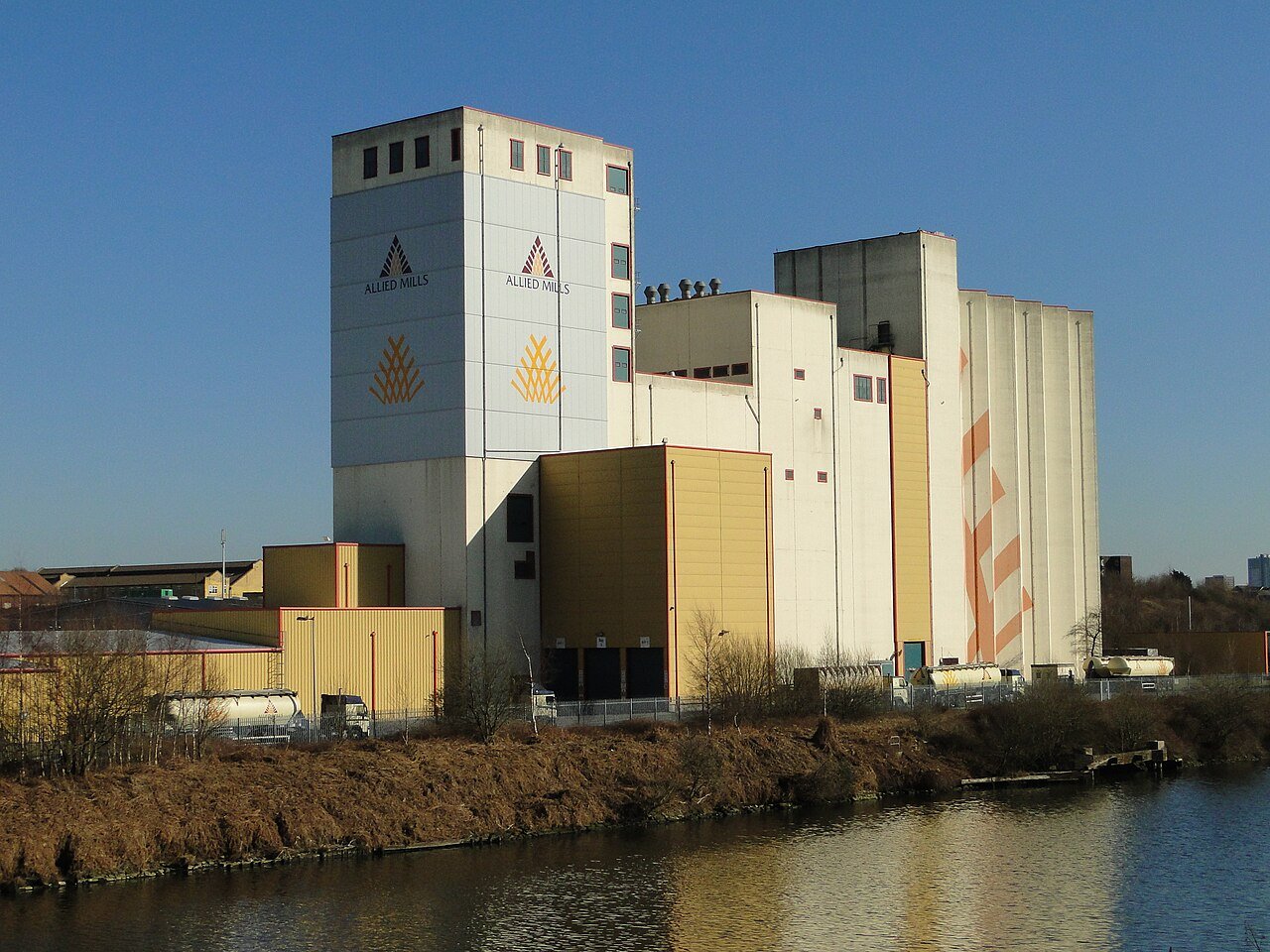
1. On-Farm Feed Mill Machinery & Processing Line
A reliable feed milling facility is an integrated sequence of mechanical unit operations. Skipping any stage compromises feed digestibility, pellet water-stability, or animal digestive health.
Intake Cleaning & Permanent Magnetic Grid
Grains (maize, wheat, soybeans) are tipped into an intake hopper equipped with a permanent neodymium cross-belt magnetic separator (>8,000 Gauss). This catches tramp iron, wire pieces, and nails that would destroy hammer mill screens or kill animals via hardware disease.
Hammer Mill Pulverizing (Micron Particle Sizing)
Heavy swinging manganese steel beaters spinning at 2,800 RPM shatter grains against replaceable perforated screen plates:
• 0.5mm – 0.8mm screen: Aquafeed fry crumbles and shrimp diets.
• 1.2mm – 1.5mm screen: Aquafeed grow-out floating pellets (fine grind is essential for starch gelatinization).
• 2.5mm – 3.2mm screen: Broiler, layer, and piglet mash/crumbles.
Horizontal Ribbon / Double-Shaft Paddle Mixer
Ensures a Coefficient of Variation (CV) <5% within 3 to 5 minutes.
Loading protocol: Charge 75% of coarse grains, then protein meals, then pre-diluted micro-ingredients (premixes, amino acids, synthetic lysine/methionine blended into 5kg fine maize flour), and finally spray liquid fats (fish oil, vegetable oil) during the last 60 seconds.
Conditioning Steam Cylinder & Extruder (Floating) vs. Pelletizer (Sinking)
A. Single / Twin-Screw Wet Extruder (For Buoyant Floating Feed): Injects dry steam (85°C–95°C) to pre-gelatinize starch. The Archimedean screw forces the dough through high-shear zones where friction raises pressure to 30–40 bar and temperature to 120°C–140°C. Upon exiting the die nozzle, the instant pressure drop flashes internal water into steam, puffing the pellet into an open-celled spongy matrix that floats for >12 hours.
B. Flat-Die / Ring-Die Pellet Mill (For Sinking Feed & Poultry): Mechanical roll-and-die compression without thermal expansion. Produces dense sinking pellets for common carp, shrimp, and poultry.
Counterflow Pellet Cooler & Vacuum Coater
Freshly extruded pellets exit at 85°C with 18%–22% moisture. The counterflow vertical cooler forces ambient air upward against descending pellets, cooling them to within 3°C of ambient room temperature and dropping moisture down to <10%–11%. Dry pellets are then vacuum-sprayed with heat-sensitive vitamins and fish oil before automated bagging.
2. Pearson Square & Least-Cost Formulation Math
The Pearson Square method is the fundamental algorithm used by animal nutritionists to balance crude protein (CP) using two ingredients or two ingredient composite groups.
Worked Example: Formulating a 40.0% Crude Protein Catfish Grow-Out Diet
Suppose you have two ingredient groups:
- High-Protein Base (54.5% CP): Blend of 60% Fishmeal (65% CP) + 40% Toasted Soybean Meal (44% CP) → $(0.60 \times 65) + (0.40 \times 44) = 56.6\%$ CP.
- Energy & Binder Base (11.5% CP): Blend of 60% Yellow Maize (9% CP) + 40% Wheat Offal / Bran (15% CP) → $(0.60 \times 9) + (0.40 \times 15) = 11.4\%$ CP.
- Target Formulation CP: 40.0% Crude Protein.
The Pearson Square Calculation:
- Diagonal Difference 1 (Parts Protein Base): $|40.0 - 11.4| = \mathbf{28.6\text{ parts}}$
- Diagonal Difference 2 (Parts Energy Base): $|56.6 - 40.0| = \mathbf{16.6\text{ parts}}$
- Total Parts: $28.6 + 16.6 = \mathbf{45.2\text{ total parts}}$
- Percentage Protein Base: $(28.6 \div 45.2) \times 100 = \mathbf{63.27\%}$
- Percentage Energy Base: $(16.6 \div 45.2) \times 100 = \mathbf{36.73\%}$
Commercial 1,000 kg Batch Sheet (Catfish 40% CP Floating Pellets)
| Ingredient | Inclusion (%) | Weight per 1,000kg Batch | Crude Protein Contribution | Primary Nutritional Function |
|---|---|---|---|---|
| Marine Fish Meal (65% CP) | 26.0% | 260.0 kg | 16.90% | High-quality lysine, methionine & attractant |
| Toasted Soybean Meal (44% CP) | 35.0% | 350.0 kg | 15.40% | Digestible plant protein base |
| Yellow Maize / Broken Rice (9% CP) | 21.0% | 210.0 kg | 1.89% | Starch source for expansion & energy |
| Wheat Offal / Flour (14% CP) | 12.0% | 120.0 kg | 1.68% | Gluten binder for floatation & fiber |
| Fish Oil / Soya Oil | 2.5% | 25.0 kg | 0.00% | Essential fatty acids (Omega-3/6) & calories |
| Dicalcium Phosphate (DCP) | 1.5% | 15.0 kg | 0.00% | Bioavailable Phosphorus and Calcium |
| Vitamin & Trace Mineral Premix | 0.5% | 5.0 kg | 0.00% | Micronutrient complete coverage |
| Synthetic DL-Methionine | 0.3% | 3.0 kg | 0.30% | Balances limiting amino acid in soy |
| Synthetic L-Lysine HCl | 0.4% | 4.0 kg | 0.35% | Muscle accretion & somatic growth |
| Mycotoxin Binder + Mold Inhibitor | 0.4% | 4.0 kg | 0.00% | Binds aflatoxins; prevents fungal mold |
| Sodium Chloride (Non-iodized Salt) | 0.4% | 4.0 kg | 0.00% | Electrolyte balance & osmoregulation |
| Total | 100.0% | 1,000.0 kg | 40.52% CP | Complete commercial floating feed |
3. Commercial Feeding Protocols: Floating vs. Sinking & Rations
Floating vs. Sinking Pellets Comparison
- Floating Extruded Pellets:
Pros: Floats on water for 12–24 hours without disintegrating. Allows immediate visual monitoring of feeding vigor, appetite, and morbidity. Completely prevents overfeeding because uneaten pellets remain visible on the surface and can be scooped out.
Cons: Requires higher electrical machinery CapEx (steam boilers, twin-screw extruders). - Sinking Compressed Pellets:
Pros: Lower equipment cost (simple flat-die pelletizer). Excellent for benthic bottom feeders (Common Carp, Mrigal, Black Tiger Shrimp, Crawfish).
Cons: Sinks into the mud within seconds. Farmers cannot see whether feed is eaten or rotting, risking sudden ammonia spikes and dissolved oxygen crashes.
Biomass Feeding Percentage & Water Temperature Matrix
Never feed a fixed amount. Calculate daily feed based on estimated standing biomass and water temperature:
- Water Temperature >28°C: Feed 2.5% to 3.5% of total biomass daily (divided into 2 feedings: 08:30 and 16:30).
- Water Temperature 24°C–27°C: Feed 2.0% to 2.5% of biomass daily.
- Water Temperature 20°C–23°C: Reduce feed to 1.0%–1.5% of biomass daily (digestive enzyme transit slows).
- Water Temperature <20°C: Cease high-protein feeding or reduce to 0.5% every 48 hours to avoid fatal gut impaction.
4. Five High-Yield Alternative Feed Bioconversion Systems
Alternative feeds convert free on-farm organic wastes into dense, highly digestible animal proteins and energy, replacing up to 50% of expensive conventional fishmeal and soybean meal.
1. Black Soldier Fly Larvae (BSFL)
Hermetia illucens
- Nutritional Profile: 42%–44% Crude Protein, 32%–35% Fat, high calcium (5%–8%) and rich lauric acid (natural antimicrobial).
- Bioreactor Design: 5-degree angled crawl-off harvesting ramps. Prepupae naturally climb up the ramp into harvest gutters when ready to pupate.
- Substrates: Brewery spent grain, market fruit waste, canteen food scraps. 10 kg of kitchen waste yields 2 kg of live harvestable larvae in 14 days.
- Feeding: Feed live directly to poultry (broilers/layers) or solar-dry and pulverize for aquafeed extrusion.
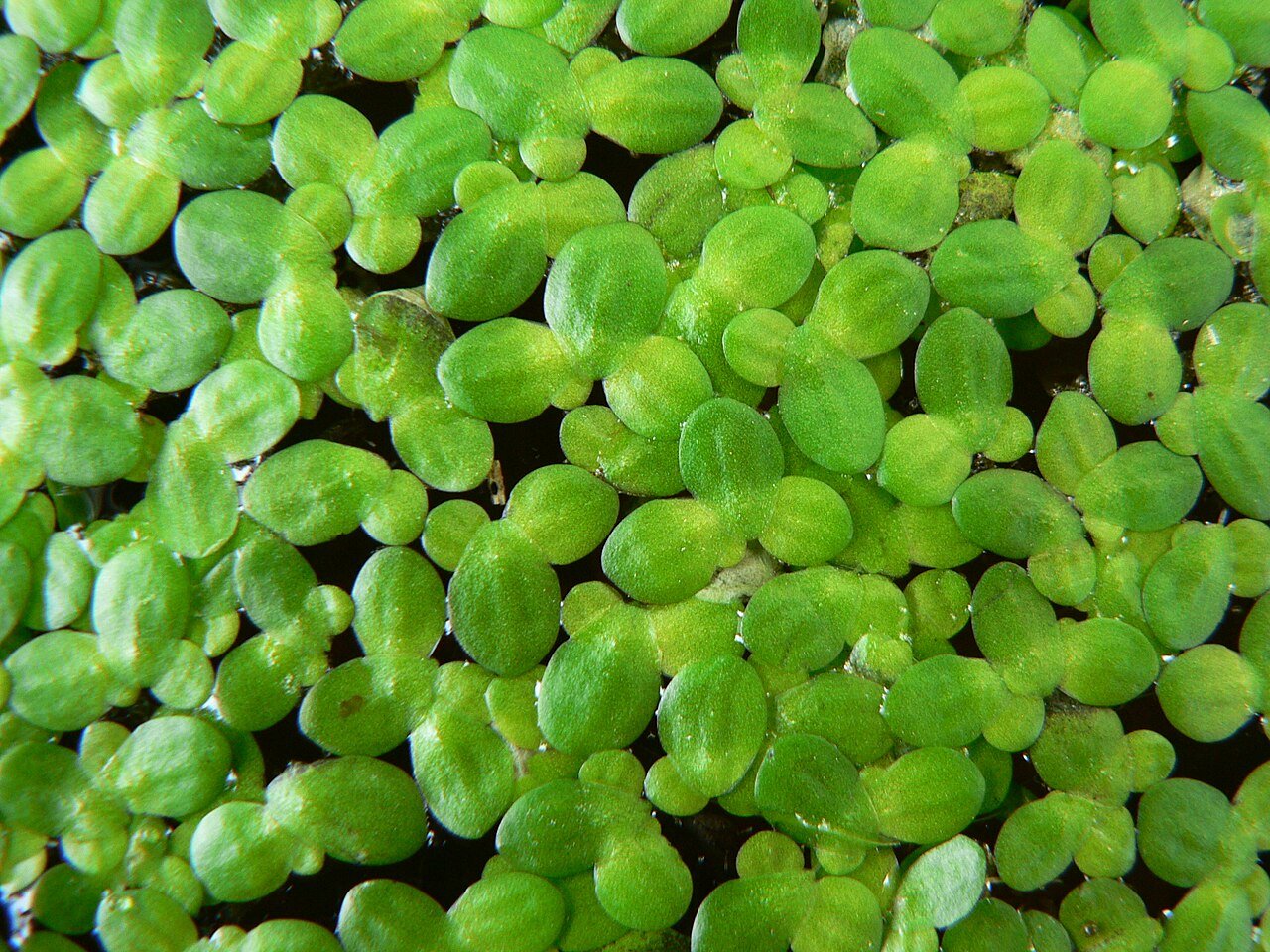
2. Duckweed (Lemna minor)
Lemnaceae family
- Nutritional Profile: 35%–43% Crude Protein on dry matter basis; rich in amino acids with high lysine and methionine levels.
- Culture Raceways: Shallow concrete or lined trenches (30cm–40cm depth) fertilized with cured poultry manure effluent.
- Growth Rate: Doubles biomass every 36 to 48 hours in warm sunshine.
- Feeding: Skim daily with fine mesh nets. Feed fresh to Tilapia, Grass Carp, Ducks, and Pigs; or sun-dry and mill into poultry mash.
3. Azolla (Azolla pinnata)
Symbiotic Anabaena azollae
- Nutritional Profile: 25%–28% Crude Protein, rich in calcium, phosphorus, magnesium, and essential amino acids.
- Fixation: Symbiotic blue-green algae fixes atmospheric nitrogen naturally, requiring only water and rock phosphate to grow.
- Pond Layout: Silpaulin lined beds (2m × 3m × 0.2m depth) under 50% green agro-shade netting. Yields 1.5–2.0 kg fresh Azolla per bed every 48 hours.
- Application: Mix fresh with commercial mash at 15%–20% ratio for laying hens to enhance yolk color and egg size.
4. Vermiculture Earthworms
Eisenia fetida (Red Wigglers)
- Nutritional Profile: 60%–65% Crude Protein (dry basis), 8%–10% Fat, excellent amino acid balance mirroring marine fishmeal.
- Worm Beds: Aerated wooden or masonry bins filled with decomposed cattle manure, shredded cardboard, and vegetable leaves (moisture 70%–80%).
- Dual Income: Produces nutrient-dense Vermicompost ("black gold" organic fertilizer) alongside harvestable worm biomass.
- Feeding: Exceptional live feed for fish broodstock conditioning and poultry free-range supplementation.
5. Solid-State Fermented Cassava Peel Silage (HQCP)
Toxin Detoxification & Protein Enrichment
- The Challenge: Raw cassava peels contain deadly cyanogenic glucosides (linamarin and lotaustralin) and only 4% crude protein.
- Fermentation Engineering: Grate fresh peels into fine mash, hydraulic press to squeeze out 50% of moisture and free cyanogenic cyanide liquid. Inoculate with Aspergillus niger or beneficial lactic acid bacteria (*Lactobacillus*), add 2% urea or poultry manure, and pack tightly into hermetically sealed silage drums for 14 days anaerobic fermentation.
- Result: Cyanide drops by 98% (rendering it 100% non-toxic), while fungal microbial protein elevates crude protein to 14%–16%, creating a high-energy cereal replacer for pigs, sheep, goats, and cattle.