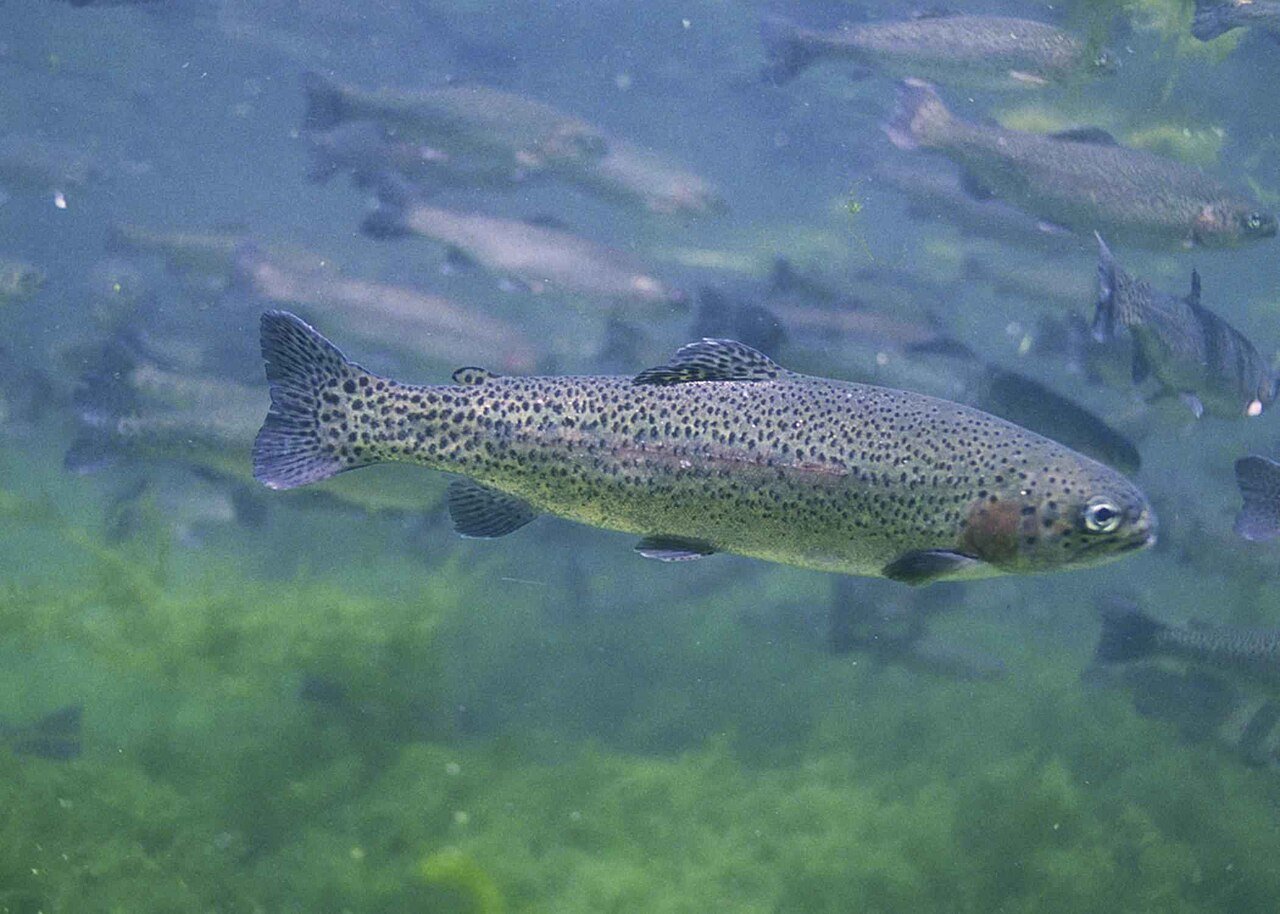
Species Profile & Coldwater Constraints
The Rainbow Trout (Oncorhynchus mykiss) is the preeminent coldwater aquaculture salmonid, revered for its fine culinary texture, high levels of heart-healthy omega-3 fatty acids (EPA and DHA), and rapid growth in mountain spring waters. Unlike tropical species, trout operate within strict thermal and hydrochemical bounds:
Optimal Temperature
12°C – 16°C
Critical Thermal Max
21.0°C (Lethal)
Minimum Dissolved Oxygen
> 7.0 mg/L (>80% sat)
Benchmark FCR
0.95 – 1.15
Concrete Linear Raceway Hydraulics
The vast majority of commercial trout are cultured in linear concrete raceways supplied by continuous gravity-fed mountain river or artesian spring water:
- Raceway Dimensions: Standard commercial units measure 25m to 35m long, 3.0m wide, and 1.0m to 1.2m water depth (Length:Width ratio of 8:1 to 10:1).
- Water Turnover Rate: Requires 2 to 4 complete water volume changes per hour. For a 90m³ raceway, incoming spring flow must be 50 to 100 liters per second (L/s).
- Current Velocity: Maintain an average linear water velocity of 2 to 4 cm/second. This flow keeps solids suspended until the effluent screen and stimulates natural swimming exercise, building muscular flesh without causing caloric exhaustion.
- Quiescent Zones (QZs): The downstream 2 to 3 meters of each raceway is separated by a perforated fish barrier to create a low-turbulence settling basin. Fecal matter and uneaten feed pellets settle into this zone, allowing bottom vacuuming twice weekly before water discharges into downstream polishing lagoons.
Hydrochemical Thresholds
| Parameter | Safe Threshold | Impact on Trout Salmonids |
|---|---|---|
| Dissolved Oxygen (DO) | 7.0 – 10.0 mg/L | Hypoxia occurs below 5.5 mg/L; acute suffocation occurs below 4.0 mg/L. Aeration cascades or liquid oxygen diffusers required in series raceways. |
| Water Temperature | 12°C – 16°C | Growth slows above 18°C; severe mortality spikes occur if water exceeds 21°C for more than 4 hours. |
| Un-ionized Ammonia (NH₃) | < 0.015 mg/L | Trout are 5× more sensitive to ammonia than catfish. Excess NH₃ damages gill lamellae, causing hyperplasia and suffocation. |
| Suspended Solids (TSS) | < 15 mg/L | Abrasive mineral silt strips gill mucus, opening direct entry for Flavobacterium psychrophilum. |
High-Energy Nutrition & Astaxanthin Pigmentation
Trout are obligate carnivores requiring nutrient-dense, high-energy extruded diets:
- Crude Protein & Lipids: Fry require 48%–50% CP with 16% fat. Grow-out trout receive 42%–45% CP with 20%–24% marine and poultry oils. Trout efficiently utilize fats for energy, sparing protein for muscle synthesis.
- Carbohydrate Intolerance: Trout lack high levels of pancreatic amylase. Dietary starch must be limited to <15%–18% and thoroughly cooked/gelatinized during extrusion to avoid glycogen accumulation in the liver.
- Flesh Pigmentation with Astaxanthin: Wild trout obtain their vibrant pink-orange coloration from carotenoid pigments in ingested freshwater crustaceans (amphipods). Commercial diets supplement nature-identical synthetic or algal (Haematococcus pluvialis) astaxanthin at 40 to 60 mg/kg of feed for 8 to 12 weeks before harvest, achieving a SalmoFan score of 28 to 30.
Pathology & Biosecurity
- Enteric Redmouth Disease (ERM): Caused by Yersinia ruckeri. Clinical signs include subcutaneous hemorrhages around the jaw, tongue, and throat. Prophylactic dip vaccination of fingerlings at 5 grams provides up to 95% lifetime immunity.
- Rainbow Trout Fry Syndrome (RTFS): Caused by Flavobacterium psychrophilum. Attacks fry under 5g during cold water periods (under 12°C), causing severe anemia, splenomegaly, and caudal peduncle erosion.
- Whirling Disease: Caused by the myxosporean parasite Myxobolus cerebralis. Attacks the cranial cartilage of young fry, causing black tails and a frenzied, tail-chasing circular swimming pattern. Managed by raising fry strictly on concrete or fiberglass tanks until cartilage ossifies into bone before exposing to river earthen ponds.