Aquaculture Housing Systems Engineering
From low-CapEx earthen ponds to ultra-dense Recirculating Aquaculture Systems (RAS), tarpaulin vats, concrete flow-through tanks, and cage culture. Structural designs, water volume hydraulics, and biosecurity protocols.
Engineering Principles of Fish Culture Vessels
The fish culture vessel is an artificial ecosystem where hydrology, biological oxygen demand (BOD), waste evacuation, and biosecurity intersect. Selecting the wrong vessel type can inflate your operational costs by up to 45% through wasted pumping energy, disease vulnerabilities, or structural failure.
Commercial Systems Decision Matrix
Compare capital investment, operating costs, stocking capacity, and biological risks across the six primary aquaculture housing methods:
| System Type | CapEx per m³ | OpEx (Power/Water) | Stocking Density | Survival Rate | Water Turnover Needed | Best For |
|---|---|---|---|---|---|---|
| Earthen Ponds | Lowest ($5–$15) | Minimal (0.2 kW/ha) | 5 – 15 kg/m³ | 75% – 85% | 5% – 10% / week | Tilapia, Carp, Pangasius, Semi-intensive Catfish |
| Tarpaulin / PVC Tanks | Moderate ($20–$40) | Moderate (pumps required) | 25 – 45 kg/m³ | 88% – 95% | 30% – 50% / day | Urban setups, tenant farmers, catfish grow-out |
| Reinforced Concrete Tanks | High ($50–$90) | Moderate to High | 40 – 70 kg/m³ | 90% – 96% | 50% – 100% / day | Commercial catfish, trout raceways, permanent facilities |
| RAS (Recirculating) | Highest ($150–$350) | High (continuous blowers/pumps) | 80 – 140 kg/m³ | 95% – 98% | 100% – 400% / hour internal | High-value species, fingerling nurseries, zero-effluent urban |
| Floating Cages | Low ($15–$30) | Low (ambient water currents) | 30 – 60 kg/m³ | 80% – 90% | Natural water movement | Lakes, reservoirs, tilapia & sea bass grow-out |
| Aquaponics (Decoupled) | High ($120–$250) | Moderate | 20 – 35 kg/m³ | 92% – 96% | Continuous recirculation | Combined leafy greens and tilapia/carp production |
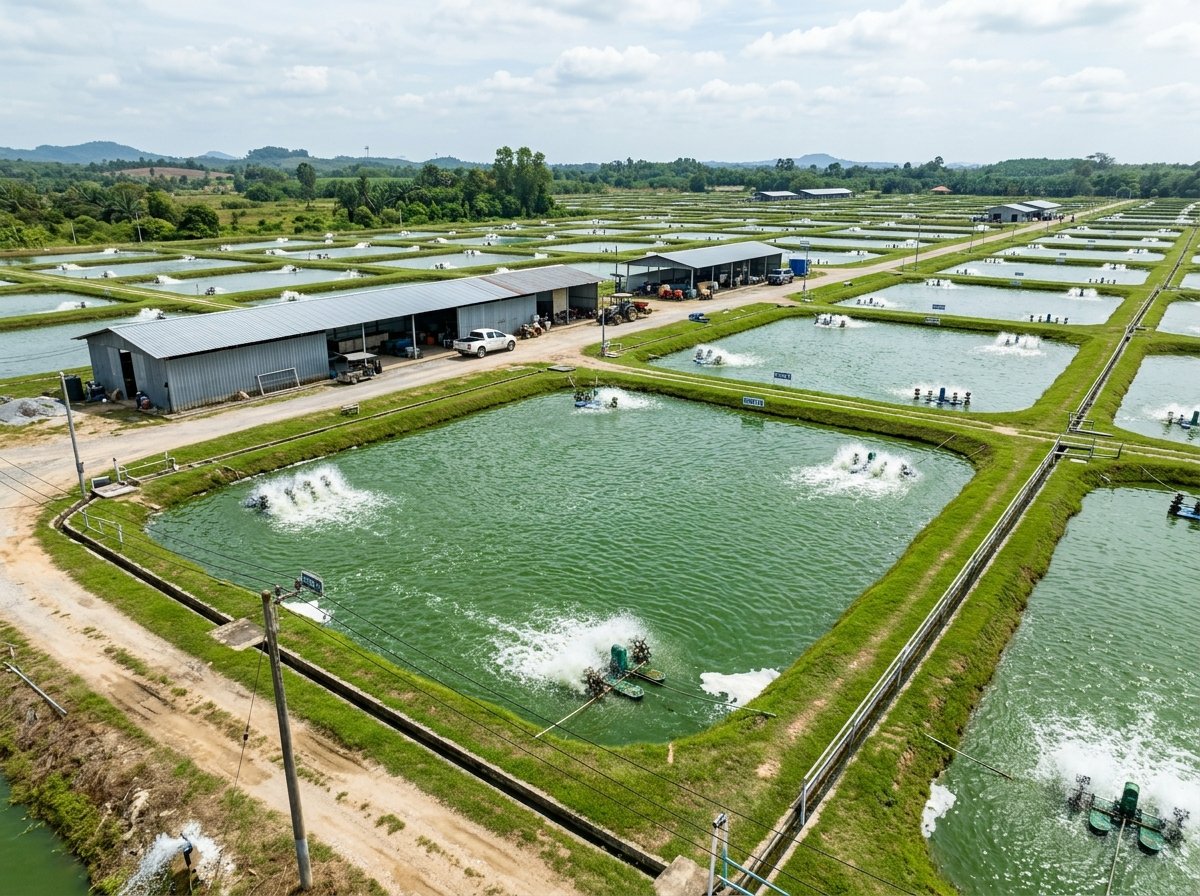
1. Commercial Earthen Ponds
Earthen ponds harness natural soil-water biogeochemical cycles to develop natural live food (phytoplankton and zooplankton blooms). When engineered properly, earthen ponds provide the lowest cost per kilogram of fish produced of any land-based system.
Civil Engineering & Construction Protocols
- Site Soil Suitability: Take core samples at 1.5m depth. Squeeze moist soil in your hand: if it holds a solid ball without crumbling, clay content is sufficient. Avoid rocky, karst, or high-sand terrain that suffers seepage rates exceeding 5mm/day.
- Dyke Core Trench (Puddle Trench): Excavate a 1m wide trench along the central axis of the proposed dyke down to an impermeable clay stratum. Backfill and compact with damp, pure clay in 15cm lifts to eliminate subterranean horizontal water piping.
- Inlet and Monk Sluice Siphon: Install a monk sluice constructed of reinforced concrete or double-flanged PVC riser pipes. A monk allows selective drainage of deoxygenated, ammonia-laden benthic bottom water while maintaining surface water levels during torrential rainfall.
- Soil Liming & Sterilization: After excavation and drying until mud cracks form (10–14 days), apply Agricultural Limestone (CaCO₃) at 1,000–2,000 kg/ha or Quicklime (CaO) at 500–750 kg/ha to neutralize acidic soils, buffer alkalinity to >80 mg/L CaCO₃, and destroy pathogens and wild fish eggs.
- Fertilization & Plankton Bloom: Apply cured organic manure (sun-dried poultry manure in perforated burlap sacks at 200–300 kg/ha) or inorganic fertilizer (16-20-0 N-P-K at 25 kg/ha) 7 days after liming. Target a Secchi disc visibility reading between 30cm and 40cm before stocking fry.
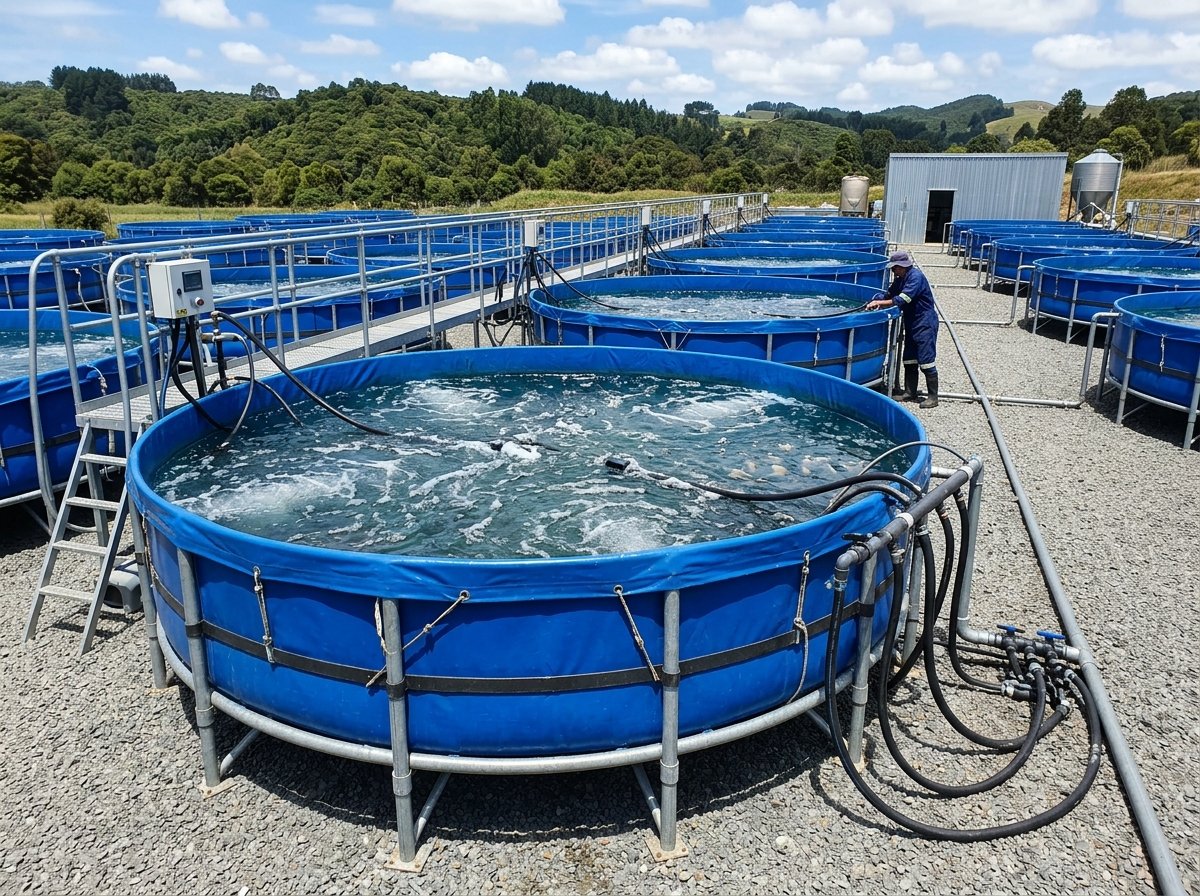
2. Heavy-Duty Tarpaulin & PVC Vats
Tarpaulin and reinforced PVC vats have transformed peri-urban aquaculture. They eliminate land tenure barriers, prevent earth burrowing, enable 100% harvest recovery, and allow rapid installation within 48 hours without heavy excavation equipment.
Installation, Plumbing & Operation Protocols
- Base Preparation: Never place tarpaulin vats directly on rough soil or sharp gravel. Lay a 50mm compacted builder's sand bed covered by a heavy-duty geotextile fleece or 20mm polystyrene insulation board to prevent punctures from rocks or subterranean termite mounds.
- Circular vs. Rectangular: Circular vats provide superior self-cleaning hydraulics. By positioning inlet jets tangentially along the tank perimeter, water rotates continuously, concentrating faecal solids and uneaten pellets into the central vortex drain.
- Center-Drain Standpipe Plumbing: Install a double-pipe siphon drain. The outer perforated PVC sleeve pulls heavy waste directly from the bottom floor, while the inner solid riser pipe dictates water height and prevents accidental tank dewatering.
- Thermal Management: Because thin PVC membranes offer near-zero R-value insulation, outdoor tarpaulin tanks suffer extreme temperature swings. Always install 70% UV shade netting overhead to prevent solar thermal overheating (>33°C) and reduce algal crash risks.
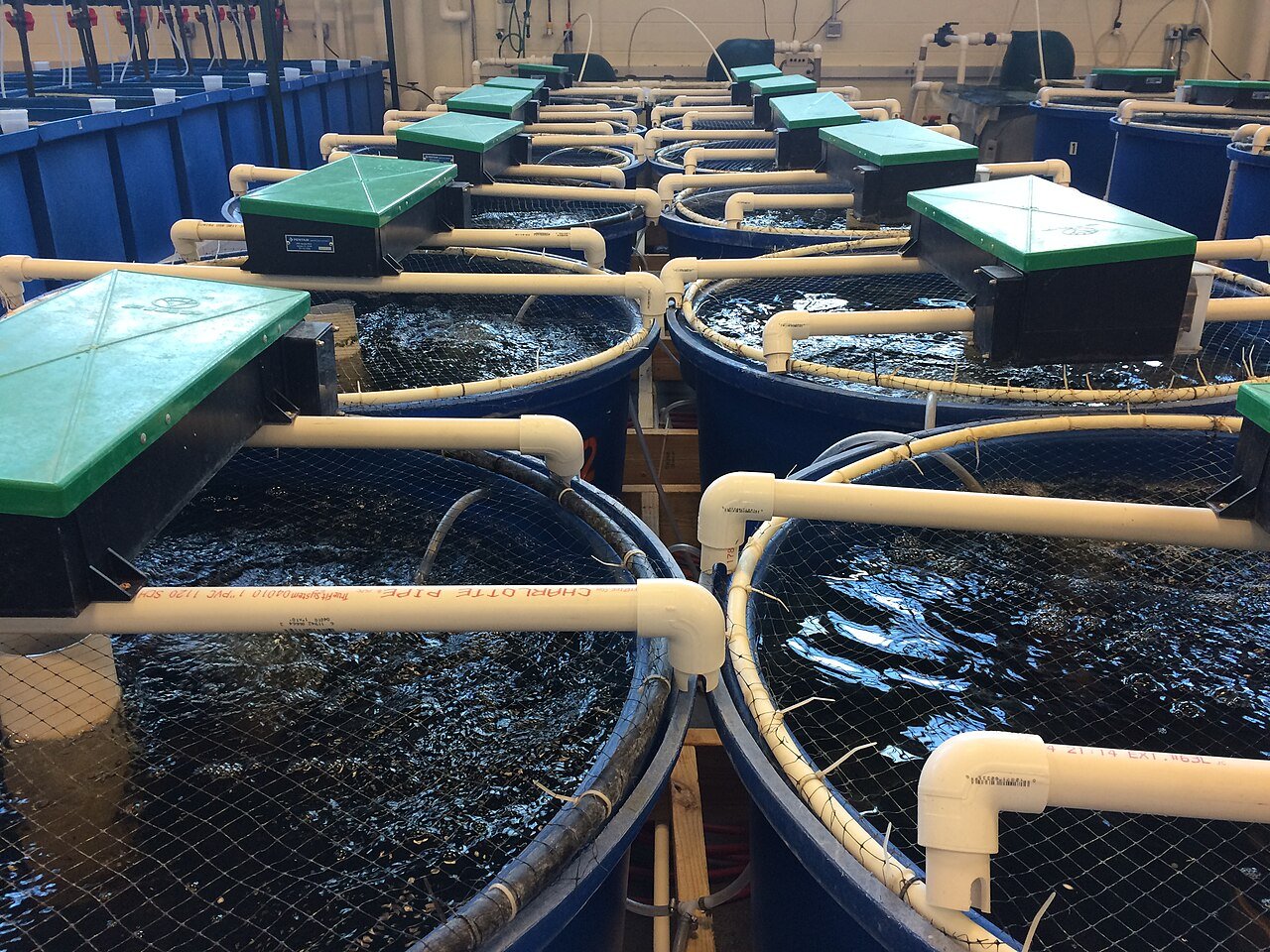
3. Reinforced Concrete Tanks & Raceways
The standard for permanent commercial finfish enterprises. Concrete facilities provide unmatched structural longevity (30+ years), withstand continuous power-washing and chemical sterilization, and allow steep floor sloping for rapid waste purging.
Engineering Best Practices
- Corner Beveling (Filleting): Square 90-degree internal tank corners create hydrodynamic dead zones where fish waste settles and putrefies anaerobically, creating hydrogen sulphide ($H_2S$). Always form 150mm curved coves (fillets) in all vertical and horizontal wall-to-floor junctions.
- Curing & Toxin Leaching: Freshly poured concrete leaches excessive calcium hydroxide ($Ca(OH)_2$), driving tank pH above 10.5—instantly lethal to fingerlings. Fill new tanks with water, add alum or agricultural vinegar, and soak for 14 days, draining and refilling twice until water pH stabilizes at neutral (7.0–7.4).
- Linear Raceway Design: For salmonids (trout) or intensive catfish flow-through, build raceways with a length-to-width ratio of 6:1 to 10:1 (e.g., 20m long by 2.5m wide by 1.2m deep). This geometry ensures plug flow hydraulics, preventing back-eddies and carrying settleable solids down to effluent screens.
4. Recirculating Aquaculture Systems (RAS)
RAS reconditions 90% to 99% of total system water volume through continuous mechanical, biological, and chemical unit operations. It offers complete biosecurity, independence from external seasonal water sources, and extreme stocking densities (up to 140 kg/m³).
Core Unit Operations in Modern RAS
- Primary Solid-Liquid Separation: Tank effluent passes through dual-drain swirl separators (extracting 80% of heavy settleable feces in 5% of flow) followed by an automated rotary micro-screen drum filter. Removing organic solids within 15 minutes of excretion prevents mineralisation into dissolved ammonia and BOD.
- Biological Nitrification (MBBR): Submerged fluidized plastic carrier media (Kaldnes K1/K3) colonized by autotrophic nitrifying bacteria convert toxic ammonia to nitrate:
Stage 1: Nitrosomonas convert un-ionized Ammonia ($NH_3$) into Nitrite ($NO_2^-$).
Stage 2: Nitrobacter convert toxic Nitrite into relatively harmless Nitrate ($NO_3^-$).
Maintain pH 7.2–7.8 and alkalinity >120 mg/L CaCO₃ (nitrification consumes 7.14 mg of CaCO₃ alkalinity per milligram of ammonia oxidized). - Degassing & $CO_2$ Stripping: High-density fish respiration produces dangerous dissolved carbon dioxide ($CO_2$). Effluent flows down a counter-current packed column degassing tower with forced draft blowers to strip $CO_2$ and maintain levels <15 mg/L.
- Pure Oxygen Injection: Venturi injectors or Low Head Oxygenators (LHO) inject industrial pure liquid oxygen ($O_2$) under pressure, super-saturating tank influent up to 150%–200% DO (12–16 mg/L) to sustain heavy feeding biomass without gill hypoxia.
- UV Disinfection & Ozone: UV-C irradiation destroys floating bacterial blooms (*Aeromonas*, *Flavobacterium*) while low-dose corona discharge ozone ($O_3$ at 10–25 g/kg feed) oxidizes refractory organics, clears micro-particulates, and removes yellow fulvic acids.
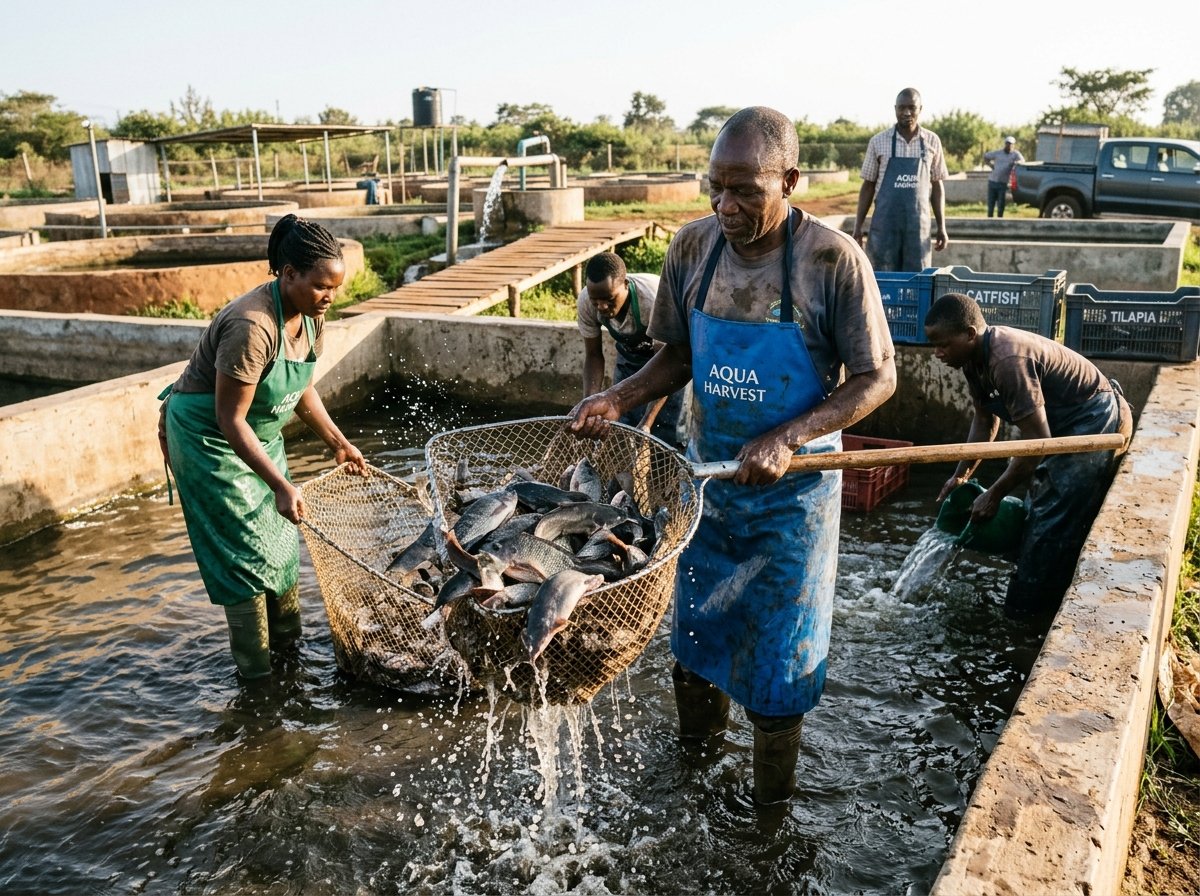
5. Floating Cage Aquaculture
Conducted in public lakes, deep farm dams, reservoirs, or sheltered sea inlets. Floating cages eliminate water pumping energy entirely, relying on natural wind currents, seiches, and tidal water exchange to flush metabolic wastes and replenish dissolved oxygen.
Operational Safety & Environmental Stewardship
- Benthic Clearance Rule: Never place cage bottoms within 2 meters of the sediment bed. Accumulated fish feces and uneaten feed form an anoxic sludge layer. If sudden water upwelling occurs during a storm, toxic anaerobic gases ($H_2S$, methane) will rise directly into the cage, causing total stock mortality.
- Net Biofouling Control: Algal fouling, freshwater sponges, and bryozoans choke net mesh openings, reducing water circulation by up to 85%. Implement a bi-weekly net-washing rotation using high-pressure lake water lances, or replace nets systematically every 30 days.
- Predator Exclusion: Install an outer anti-predator net skirt (40mm heavy-gauge braided polyethylene) suspended 1 meter outside the fish containment net to prevent otter, monitor lizard, cormorant, and pelican attacks. Overhead top bird netting is mandatory.
Explore Detailed Commercial Fish Species Blueprints
Now that you understand holding systems engineering, dive into species-specific husbandry protocols: